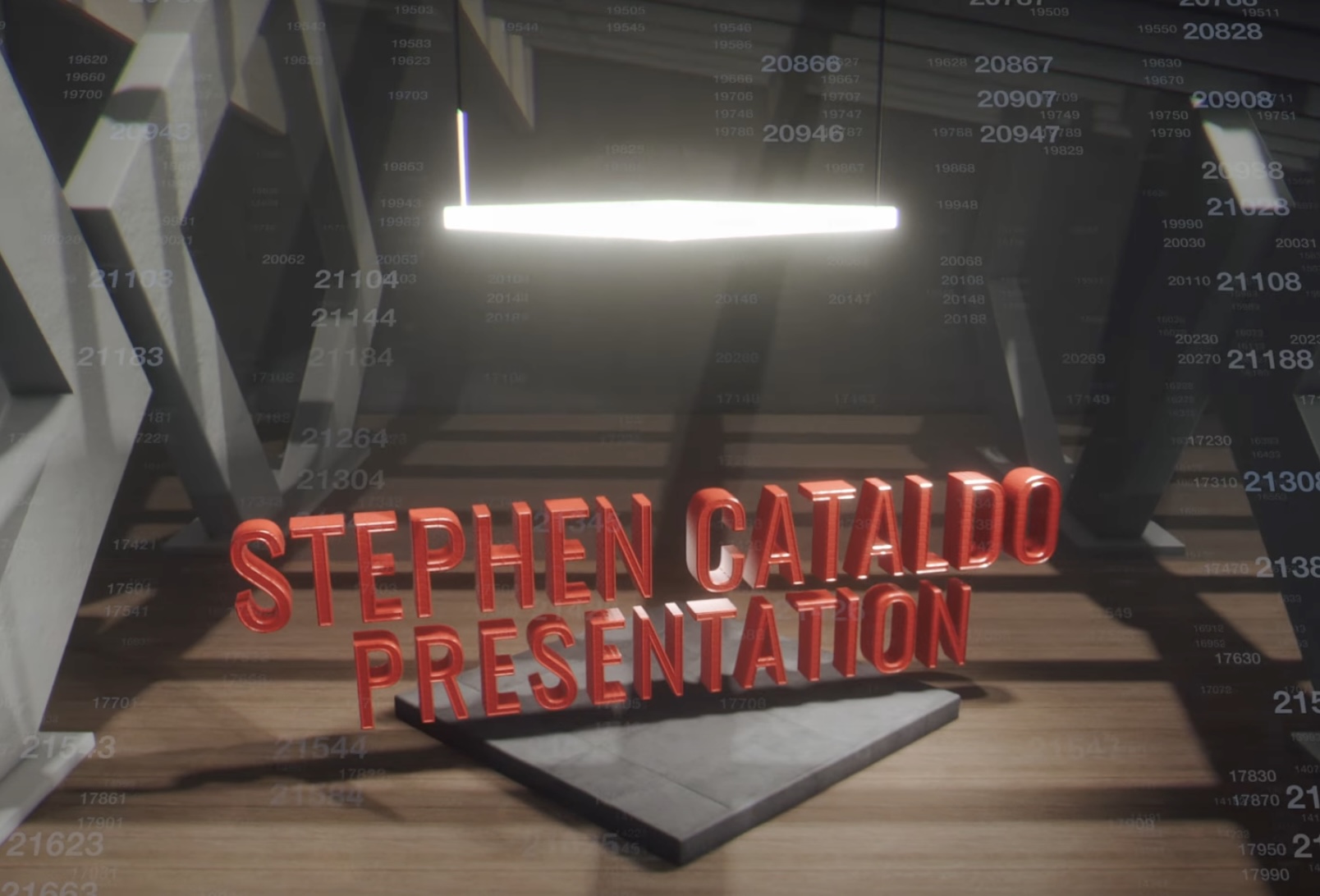
Stephen Cataldo provides marketing and digital media services, website design, social media marketing, 3D animation, graphic design, product design and video and music soundtrack production services.
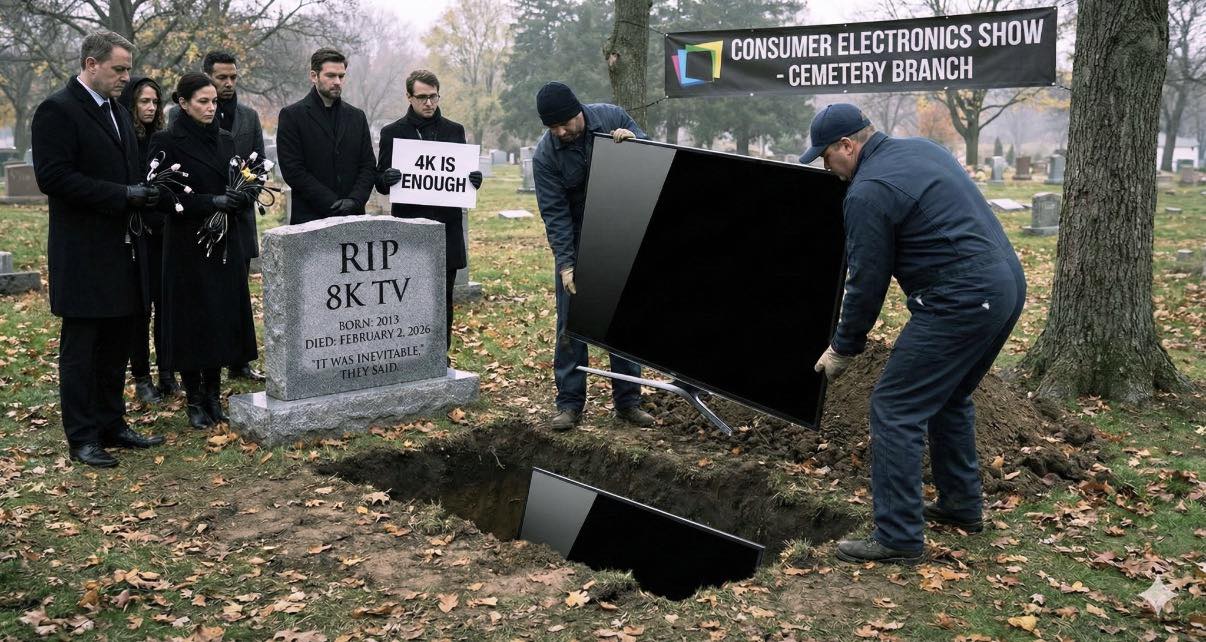
8K TV is officially dying, and the production industry should be relieved….
LG Display just stopped making 8K panels. Sony killed their 8K TVs in April. TCL bailed in 2021. The 8K Association went from 33 members to 16, and doesn’t include a single major panel supplier anymore.
The consumer electronics industry spent a decade pushing 8K as inevitable. They were wrong, and anyone working in production knows exactly why.
Yes, 8K capture gives you incredible flexibility in post. Extra resolution means better stabilization, reframing, and punch-ins without quality loss. For production workflows, it’s genuinely useful.
But here’s what the TV manufacturers never wanted to admit: we can’t afford to deliver 8K to consumers right now, and most wouldn’t benefit if we could.
The math is brutal:
RAM, vRAM, and SSD prices are at decade highs
Most AI tools barely function at 4K, let alone 8K
Moving that much data requires infrastructure that doesn’t exist at scale
The average home internet connection can’t reliably stream 8K
Most content is CGI or will be AI-generated – do we really need to render synthetic imagery at 33 million pixels?
Even if you sit close enough to theoretically see the difference (which research shows is under 3 feet for a 50″ display), there’s virtually zero native 8K content to watch. We still don’t have enough 4K content, and plenty of people are watching 1080p.
The industry tried the same playbook with 3D TVs. Pushed hard, predicted inevitability, then quietly discontinued everything when consumers didn’t bite.
When fiber connections are standard in homes and processing costs drop by 70%, we can revisit consumer 8K. Until then, it’s a solution looking for a problem that doesn’t exist outside production suites.
The TV industry just admitted what production professionals already knew.
8K for consumers was always about selling premium TVs, not solving real needs.
BEST of 2025 Burlington Awards
Kelsey Media Productions • Best Video Production Service
in Burlington, Massachusetts for 2025
Dear Kelsey Media Productions Team, we are pleased to inform you that Kelsey Media Productions has been officially recognized as the BEST of 2025 Burlington Award Winner in the Video Production Service category – an honor based on verified data from Google Reviews, as analyzed and certified by BusinessRate.
BusinessRate provides intelligent ranking solutions and comprehensive review management services to help local businesses thrive in competitive markets through data-driven insights and proven strategies.
This recognition is part of the BusinessRate BEST of 2025 Burlington Awards, which identify local leaders in customer satisfaction, brand reputation, and service excellence using publicly available Google review data. Your BusinessRate Score is a complete performance metric that combines all factors with a single, easy-to-understand score. This comprehensive rating shows how your business ranks against local competitors.
Congratulations again on this outstanding achievement – earned not by application or nomination, but by the authentic feedback of your own customers and performance.
Thank you for representing excellence in Burlington!
Warm regards, The BusinessRate Staff BEST of 2025 Burlington Awards
www.businessrate.com/awards | Based on Verified Google Review Data
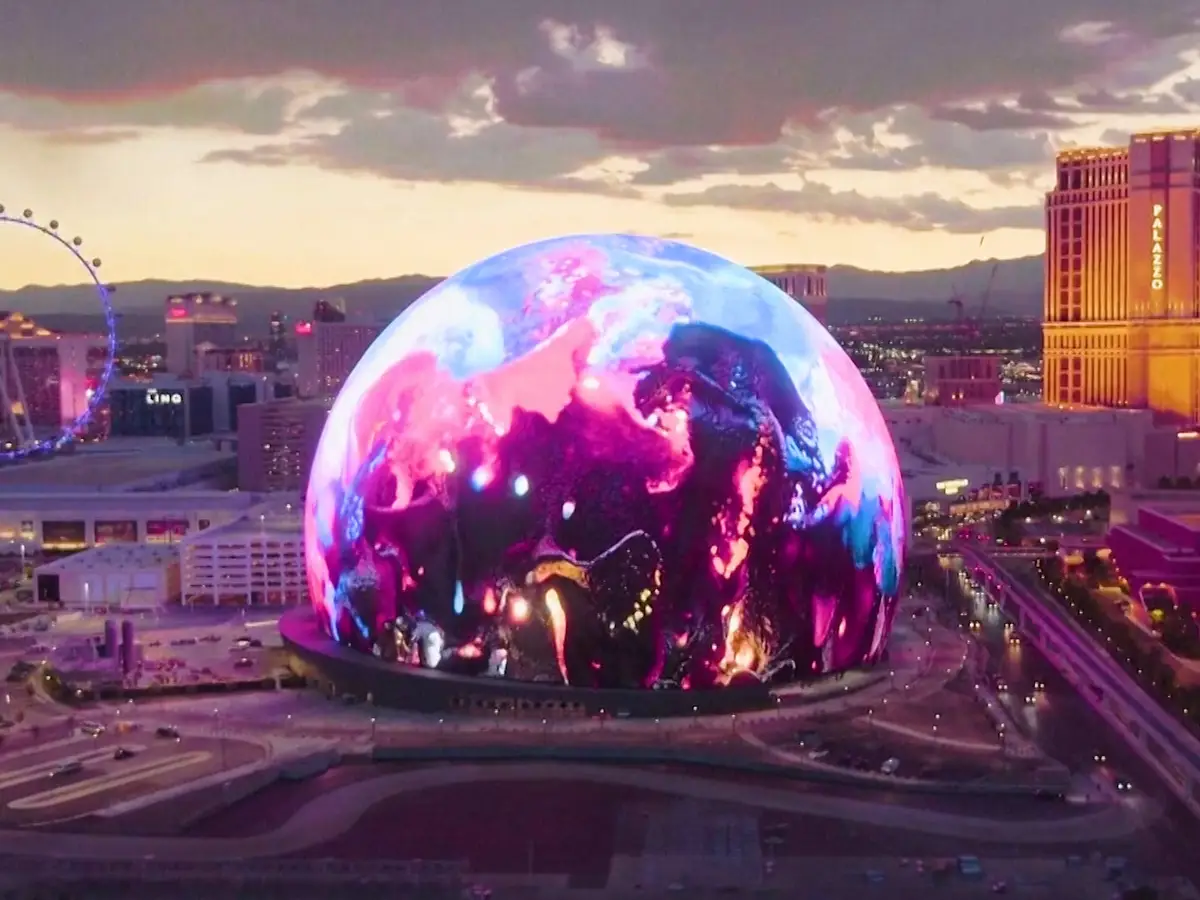
(CNN) — It squats on the Las Vegas skyline like an enormous spaceship, black and mysterious – until night falls, when it will glow like the Earth from space.
The MSG Sphere won’t open to the public for almost three more months, when U2 christens the entertainment venue with a series of concerts. But anticipation is growing.
Cue the superlatives. At 366 feet tall and 516 feet wide, it’s being billed as the world’s largest spherical structure. Its bowl-shaped theater reportedly contains the world’s highest-resolution wraparound LED screen. And its exterior is fitted with 1.2 million hockey puck-sized LEDs that can be programmed to flash dynamic imagery on a massive scale – again, reportedly the world’s largest. It was fully illuminated for the first time Tuesday night to celebrate the Fourth of July.
But Sphere is inspiring rapturous reactions from those who have seen it.
“There’s nothing like it. It’s light years ahead of everything that’s out there,” says U2’s The Edge while touring the venue in a recent Apple Music video.
“It’s absolutely stunning to look up and see what’s in front of you,” says Rich Claffey, Sphere’s chief operations officer. “I’ve been in the entertainment business for almost 40 years. I’ve never seen anything like this, and I’m not exaggerating. It is off the charts.”
The Sphere’s exterior will be illuminated every day and night with animations and other imagery, sometimes tied to the season. For example, it could transform into a giant pumpkin at Halloween and a snow globe at Christmas.
Some people are already joking on Twitter that its enormous, swirling visuals will cause traffic accidents.
The venue will host music, film events and some sports
Sphere was designed by Populous, the global architecture firm behind many of the world’s top sports arenas. Construction costs, inflated by the pandemic, have climbed to $2.3 billion – more than Sphere’s glitziest Vegas neighbors, including the Bellagio and Allegiant Stadium.
The globe seats almost 18,000 people, sits one long block east of the fabled Las Vegas Strip and will be connected by a pedestrian walkway to the Venetian resort complex.
It’s scheduled to open September 29 with “U2:UV Achtung Baby Live at Sphere,” a series of 25 concerts built around the Irish band’s landmark 1991 album “Achtung Baby” and running through mid-December. Ticket prices start at $140.
The venue also will host exclusive screenings of “Postcard From Earth,” a film by Darren Aronofsky that promises to take full advantage of Sphere’s vast screen by offering viewers an eye-popping tour of the planet.
“Most music venues are sports venues. They’re built for sports – they’re not built for music. They’re not built for art,” says U2’s Bono in the Apple Music interview.
“This building was built for immersive experiences in cinema and performance … you can’t come here and see an ice hockey game.”
In November the Formula 1 Las Vegas Grand Prix’s street circuit will pass through the Sphere property, and the arena eventually hopes to host boxing, mixed martial arts and other events as well.
But Sphere’s main draw may be as a venue for live music – especially the marquee residencies for which Vegas is known.
The acts onstage will be dwarfed by the towering 16K LED screen, which wraps over and around much of the audience and can augment the concert experience with trippy animations or close-ups of the performers.
“The screen goes from ground (level) to 250 feet high, all the way around…” says Claffey, the Sphere operations officer. “It keeps you fully immersed when you’re sitting in that bowl. I used to love IMAX in New York City, but this will blow that away.”
Sphere’s producers promise next-level audio as well. Claffey says that more than 160,000 speakers spread around the bowl will deliver the same pristine sound to every seat, whether someone is in the top row or down on the floor.
The venue also is equipped with haptic seats that can vibrate to match whatever is happening onscreen – an earthquake, for example – and 4D machines that can create wind, temperature and even scent effects.
“The way I describe it to my friends and family is, it’s the entertainment venue of the future,” Claffey says.
If it all sounds a little over the top, well – this is Vegas.
It remains to be seen whether Sphere can deliver on its extravagant promises. But if it works, the live-music experience may never be quite the same.
These days, media is an enormous concern in advertising and marketing.
Companies know they have to innovate to reach new audiences. They are aware of the need for multichannel marketing that really puts their business in the right light, and gets them the visibility that they need.
But how do you go about doing that?
To a large extent, you need the right consulting firms and the right services to develop these new types of campaigns. Text, in many ways, isn’t enough anymore. You need visuals and multimedia components that you can stream in the right channels, put on the web, and generally use for engagement and branding power.
With that in mind, we offer these types of services to help clients to market themselves in this brave new world of digital media possibilities.
Video Production Services
Video is a large part of what we do. Our customized project management in this realm allows our clients to put together professional-looking footage that is useful in so many different ways. Some of this ends up getting streamed on places like YouTube, Vimeo, Hulu and other smart TV channels. Some of it ends up linked to Facebook, Instagram or Twitter posts. In other cases, people are tying it into their own websites.
No matter where it goes, companies need the help of third-party services with excellent production capabilities and more to deliver the results that are going to provide needed returns.
Music Soundtrack Production
Here’s another part of what we offer to media clients.
Sometimes, what you need is a jingle or an audio piece that will help represent your business well.
Not all video companies do this kind of audio, but we do; we’re active in helping companies to come up with auditory taglines and rhythms that will attract the right attention. We are also one of the few production houses locally who can provide you with a 5.1 surround production.
3D Animated Logo/Products
Another type of visual service that we do goes all of the way back to those ancient types of graphic projects that we saw with things like Flash 5 animation years ago.
Fast-forward to the present, and companies are using much different tools for 3D and animated visuals.
One of the things we do is take the company’s existing logo or product and make it three-dimensional object we can then animate it, in order to show off the brand directly in a more compelling way.
Think about all of these services and what they bring to your business model. Then get connected to a firm like Kelsey Media Productions that knows how to get your brand and message in front of the right people, with competitive video and more. Have more questions or looking to be more noticed give us a call at 781-365-4800!
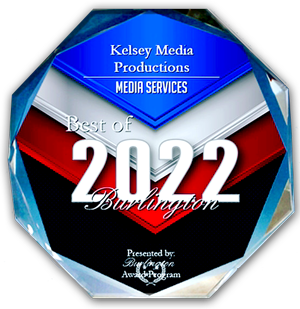
Burlington Award Program Honors the Achievement BURLINGTON February 10, 2022 — Kelsey Media Productions has been selected for the 2022 Best of Burlington Award in the Media Services category by the Burlington Award Program.
Each year, the Burlington Award Program identifies companies that we believe have achieved exceptional marketing success in their local community and business category. These are local companies that enhance the positive image of small business through service to their customers and our community. These exceptional companies help make the Burlington area a great place to live, work and play.
Various sources of information were gathered and analyzed to choose the winners in each category. The 2022 Burlington Award Program focuses on quality, not quantity. Winners are determined based on the information gathered both internally by the Burlington Award Program and data provided by third parties.
About Burlington Award ProgramThe Burlington Award Program is an annual awards program honoring the achievements and accomplishments of local businesses throughout the Burlington area. Recognition is given to those companies that have shown the ability to use their best practices and implemented programs to generate competitive advantages and long-term value.
The Burlington Award Program was established to recognize the best of local businesses in our community. Our organization works exclusively with local business owners, trade groups, professional associations and other business advertising and marketing groups. Our mission is to recognize the small business community’s contributions to the U.S. economy.
SOURCE: Burlington Award Program
CONTACT:Burlington Award ProgramEmail: PublicRelations@selectionstown.com
Each stage of the production process takes a different amount of time. The length of your video and complexity of the illustrations and motion design also factors in. This outline presents a breakdown of what to expect during the explainer video production process. You’ll also learn how long each stage of the production process takes.
Explainer Video Production Process Timeline:
1). Pre-Production
2). Script
3). Storyboard
4). Voiceover + Auditions
5). Concept Art
6). Illustrations
7). 3D Animation
Pre-Production
Before you start looking for an animation studio or freelancer to make your custom animated video, spend some time getting clear about what kind of animation you want to create. Once you’ve spent some time identifying the important criteria, you’ll be better prepared to pick out an animator that can produce the video you want, within your desired budget and timeline.
While you’re in the pre-production stage, you should also spend some time organizing files like fonts, logos, icons, branding documents and more.
Not sure which animation style is right for your video? Read out our pros and cons list to learn what’s involved with producing different styles of animated videos:
Script
Under a normal production timeline, the script writing phase takes about 1 week for an animated video that’s 1 minute long. After the animator learns about your video idea, they will take 1-3 days to create the first draft of the script. Take a day or two to review the script and organize your feedback for the production team. Once the writer receives your feedback, they can typically turn around a revised script in 24 hrs or less. Scripts typically take 1-3 rounds of edits to get to the final draft.
If you are writing the script yourself, allow 1-2 weeks for your team to review it and contribute their feedback. Ensure everyone has approved the script before you share it with your production team.
Storyboard
The next step of the explainer video production process is to turn the script into a storyboard. A storyboard is a document that explains what visuals and what motion design needs to happen during every sentence of your script. It’s essentially a blueprint for the design and animation teams so that they know what to create.
A storyboard for a 1-2 minute video typically takes 1-4 days to produce. Then, it takes about 2-3 days to review the storyboard with the client and incorporate their edits.
You can save money on your production budget by creating your own storyboard. We also have a free storyboard template and storyboard creation guide which you can download by clicking on the image below:
Voiceover + Auditions
Once your storyboard is approved, the next step of the explainer video production process is to get voiceover auditions for you to review. It takes about 1-3 business days to get voiceover auditions recorded and delivered from multiple artists. You should take a day or two to review the options with your team. Then, notify your animator about which audition is your favorite option. Tell your animation team if you want the voiceover artist to modify their tone when recording the full voiceover.
Your animation team will then get the full voiceover recorded in 1-3 business days. When the VO is ready to review, give it a detailed listen with your team. If you love the voiceover as is, let your animation team know. Otherwise, send them detailed feedback so that the voiceover artist will know which parts to rerecord. Provide specific instructions about how you want them to change the timing, energy or inflection used. It is also helpful to list what time in the recording the changes need to be made
Concept Art
After your storyboard is approved, the next phase of the explainer video production process is to create the concept art for your video. Depending on the size of your budget, you can expect to receive 1-5 different visual concepts showing how one scene of your animated video can be designed. This typically takes 2-5 days depending on the # of samples being created and the level of detail used in your animation.
Once you receive your concept art, take a day or two to review the concepts with your team. Let your design team know which style you prefer. If you want to make visual refinements to the styleframe, now’s the time to speak up. If you like design elements from multiple concepts, tell your design team. They can combine the best design elements into a single visual concept for you to review and approve. This typically takes another day or two for the designers to create and then run by you for approval.
Illustrations
Now that your concept art is approved, the designers will create the rest of the art for your video. It takes about one week to create all of the art for a one minute animated video. Give your illustrations a thorough and detailed review. It’s important you are happy with the art before animation begins. If you love it as-is, let them you know you approve the art. Otherwise, submit your feedback to the design team and wait 1-3 days for the update. It’s not uncommon to do a 2nd round of edits on the illustrations for an additional layer of polish.
Animation
When the art, soundtrack and voiceover are approved, the animation team will start animating your video. One animator can animate about one minute of 2D or 3D animated content in one week. Revisions can typically be turned around in 1-2 days after the animator receives your feedback. When you receive the first draft of their video, circulate the first draft among your stakeholders. It’s a good idea to get different people’s impressions and feedback. This way, when you come back with your list of edits, all the ideas are consolidated and can be addressed at once. Going through multiple rounds of revisions at this stage will likely increase your final production cost and the amount of time it takes to get your animation completed.
Post-Production
The final stage of the explainer video production process is called, “Post-Production.” Post-Production includes adding little details like sound effects, or rendering out multiple versions of the video with slight variations (perhaps you want to show a different business location’s address at the end of each video). These kinds of edits are typically simple and take 1-2 days to process after the final draft draft is approved.
At Kelsey Media Productions we can make your vision a reality! Visit us now at KelseyMediaPoructions.com or call 781-365-4800!
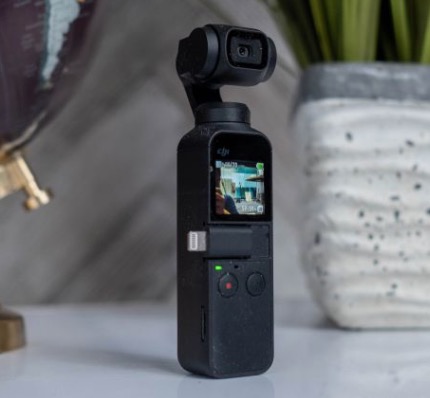
We recently got a hold of the Osmo Pocket 4K Video Camera by DJI and were quite impressed! The DJI Osmo Pocket puts video stabilization in the palm of your hand, with a small camera that smooths out your footage thanks to a 3-axis gimbal. It’s pocketable, like the name suggests, and doesn’t hog your smartphone, like the larger DJI Osmo Mobile 2. The fluid 4K resolution is ideal for anyone who uploads to YouTube, yet hates the idea of being shackled to professional-sized camera stabilization equipment. It’s not as durable as a GoPro and its microphone isn’t the best, but our testing proved that it’s the real ‘hero’ of smooth video and video transfer speeds.
Video below was produced by Kelsey Media Productions from footage we shot at the play date opening for Encore Boston Harbor located in Massachusetts. Video was shot with a DJI Osmo Pocket camera in 4K @ 60fps. Kelsey Media Productions
A camera that can be used for steady B-Roll footage along with having a small compact design makes it a great camera for on-the-go shooting or vacation fun!
A French family just became the first to permanently live in a 3D-printed home
At 350 square feet, the house was far cheaper than the average tiny home, which has a price tag hovering at around $25,000, but can often reach six figures. Before using 3D-printing technology, it took New Story eight months to build 100 homes, each costing about $6,000.
While the prototype was being developed, Icon’s printer, known as the Vulcan, was running at only 25% speed. That gave the companies confidence that they could build a 600- to 800-square-foot home in just 24 hours for $4,000 or less.
When it comes to producing an average-sized home — around 2,000 square feet — the savings aren’t quite as stark. A year after releasing its $10,000 prototype in Austin, Texas, Icon told the Wall Street Journal that printing a 2,000-square-foot home would cost around $20,000.
More remarkable is the fact that the company’s upgraded printer, the Vulcan II, is now available for purchase, and could soon be used to produce affordable homes in places like Austin and Latin America.
Icon’s first 3D model offers a glimpse of what the machine could produce in the future. Take a look.
The Vulcan II can produce a home seamlessly onsite, without having to piece together individual units. The Vulcan II can produce a home seamlessly onsite, without having to piece together individual units. The printer churns out layers of cement, which amass to form the walls of the home. Non-printed fixtures like doors and windows are installed later.
The Vulcan II is capable of producing walls that are up to eight-and-a-half feet tall and up to 28 feet wide.
The printer is designed to be mobile and weighs about 3,800 pounds. The Vulcan II is operated by a tablet, which means only a few workers are required to produce a 3D home.
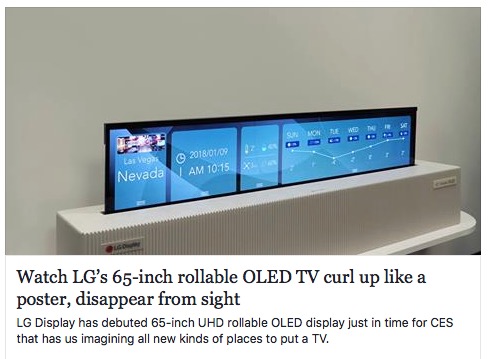
After two years of watching white-gloved LG Display engineers gingerly roll up prototype OLED panels, the company has finally created a functioning roll-up OLED TV. Of course the idea of being able to roll up your TV, throw it in your backpack and take it wherever you want is a fun, futuristic idea, but LG has found a more practical application for a rolling OLED television. It is both literally and figuratively the most flexible TV ever made.
This is how it works: flexible OLED panel is mounted to a motorized spindle, set in a rectangular box. You can’t see the mechanics, all you see is the TV going up and down. But why would you want to be able to move your TV up and down like this?
The appeal of hiding your TV is clear. When you don’t want to see your TV, you simply put it away. But the practical applications go further than that. You can adjust the TV so that it’s sized for different aspect ratios. Admittedly, different aspect ratios have a smaller size, but this is a very cool application for watching movies.
You may have noticed that, when watching movies, you see black bars on the top and the bottom of the screen. This is because many movies are filmed in a 2.39:1 (or 21:9) aspect ratio, and a convention 16:9 widescreen TV can’t fit the picture. To accommodate, the letterbox bars are added so you can see the full width of the film. By rolling this TV down to obscure part of the screen, the rolling OLED TV can be resized to 21:9, and the black bars are unneeded.
Roll it down a bit further, and you can have an extremely low-profile display which could be used for computing, informational display, or simply for showing pictures. Use your imagination. What would you place in a slick strip of roll-up OLED TV?
The TV won’t be seen commercially in 2018, but it could very well be LG’s flagship offering in 2019. This time next year, we could be talking about when you could buy your own roll-up OLED. Between now and then, LG TV needs to take this display and build it into a TV. It will need a box to handle HDMI connections, the processing chips, optical digital audio output jacks, and all the other features we’re used to seeing in a TV. It’s also possible LG’s TV division could somehow fold a soundbar into the final design.
It’s also possible the TV could be hidden in a piece of furniture, so you wouldn’t have a TV in the room until you pressed a button on a remote control.
The roll-up OLED isn’t the only innovation to be seen at the private LG Display booth. We also got up close and personal with the 88-inch 8K OLED and we’ll be posting video of that TV very shortly.




 Another type of visual service that we do goes all of the way back to those ancient types of graphic projects that we saw with things like