Category Archives: Technology

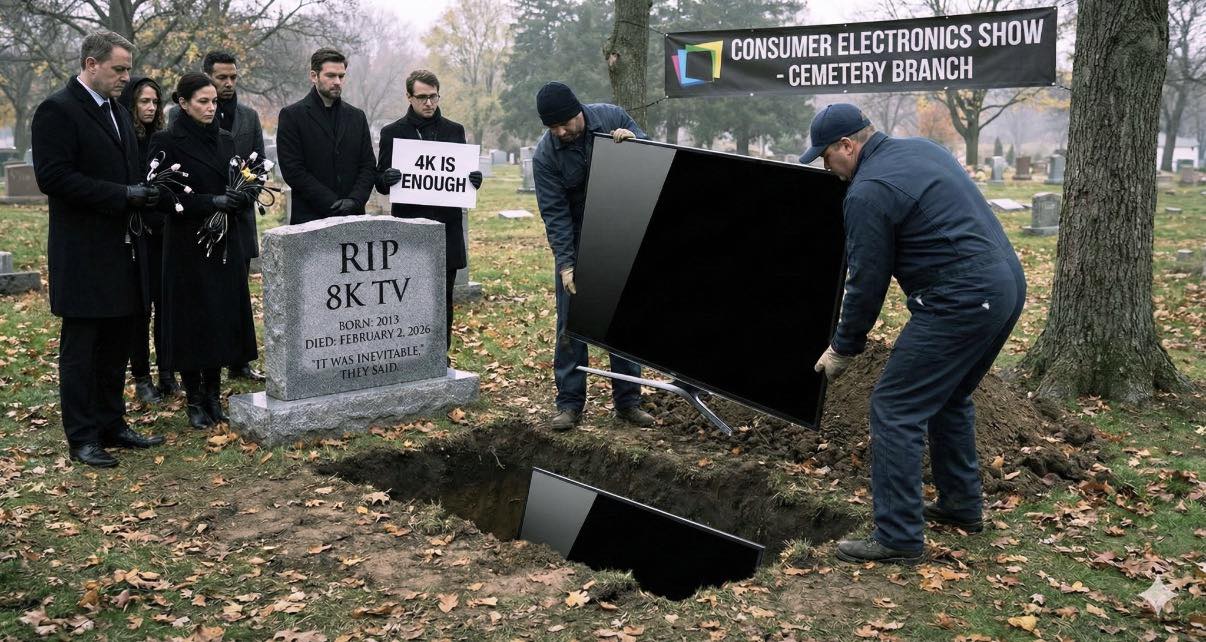
Is 8k dead? Dying?

8K TV is officially dying, and the production industry should be relieved….

LG Display just stopped making 8K panels. Sony killed their 8K TVs in April. TCL bailed in 2021. The 8K Association went from 33 members to 16, and doesn’t include a single major panel supplier anymore.

The consumer electronics industry spent a decade pushing 8K as inevitable. They were wrong, and anyone working in production knows exactly why.

Yes, 8K capture gives you incredible flexibility in post. Extra resolution means better stabilization, reframing, and punch-ins without quality loss. For production workflows, it’s genuinely useful.

But here’s what the TV manufacturers never wanted to admit: we can’t afford to deliver 8K to consumers right now, and most wouldn’t benefit if we could.

The math is brutal:

RAM, vRAM, and SSD prices are at decade highs

Most AI tools barely function at 4K, let alone 8K

Moving that much data requires infrastructure that doesn’t exist at scale

The average home internet connection can’t reliably stream 8K

Most content is CGI or will be AI-generated – do we really need to render synthetic imagery at 33 million pixels?

Even if you sit close enough to theoretically see the difference (which research shows is under 3 feet for a 50″ display), there’s virtually zero native 8K content to watch. We still don’t have enough 4K content, and plenty of people are watching 1080p.

The industry tried the same playbook with 3D TVs. Pushed hard, predicted inevitability, then quietly discontinued everything when consumers didn’t bite.

When fiber connections are standard in homes and processing costs drop by 70%, we can revisit consumer 8K. Until then, it’s a solution looking for a problem that doesn’t exist outside production suites.

The TV industry just admitted what production professionals already knew.

8K for consumers was always about selling premium TVs, not solving real needs.

Three Important Services We Provide

by Kelsey Media Productions

These days, media is an enormous concern in advertising and marketing.

Companies know they have to innovate to reach new audiences. They are aware of the need for multichannel marketing that really puts their business in the right light, and gets them the visibility that they need.

But how do you go about doing that?

To a large extent, you need the right consulting firms and the right services to develop these new types of campaigns. Text, in many ways, isn’t enough anymore. You need visuals and multimedia components that you can stream in the right channels, put on the web, and generally use for engagement and branding power.

With that in mind, we offer these types of services to help clients to market themselves in this brave new world of digital media possibilities.

Video Production Services

Video is a large part of what we do. Our customized project management in this realm allows our clients to put together professional-looking footage that is useful in so many different ways. Some of this ends up getting streamed on places like YouTube, Vimeo, Hulu and other smart TV channels. Some of it ends up linked to Facebook, Instagram or Twitter posts. In other cases, people are tying it into their own websites.

No matter where it goes, companies need the help of third-party services with excellent production capabilities and more to deliver the results that are going to provide needed returns.

Music Soundtrack Production 

Here’s another part of what we offer to media clients.

Sometimes, what you need is a jingle or an audio piece that will help represent your business well.

Not all video companies do this kind of audio, but we do; we’re active in helping companies to come up with auditory taglines and rhythms that will attract the right attention.  We are also one of the few production houses locally who can provide you with a 5.1 surround production.

3D Animated Logo/Products

Another type of visual service that we do goes all of the way back to those ancient types of graphic projects that we saw with things like Flash 5 animation years ago. 

Fast-forward to the present, and companies are using much different tools for 3D and animated visuals.

One of the things we do is take the company’s existing logo or product and make it three-dimensional object we can then animate it, in order to show off the brand directly in a more compelling way.

Think about all of these services and what they bring to your business model. Then get connected to a firm like Kelsey Media Productions that knows how to get your brand and message in front of the right people, with competitive video and more. Have more questions or looking to be more noticed give us a call at 781-365-4800!

Kelsey Media Productions Receives 2022 Best of Burlington “Media Services” Award.

Burlington Award Program Honors the Achievement BURLINGTON February 10, 2022 — Kelsey Media Productions has been selected for the 2022 Best of Burlington Award in the Media Services category by the Burlington Award Program.

Each year, the Burlington Award Program identifies companies that we believe have achieved exceptional marketing success in their local community and business category. These are local companies that enhance the positive image of small business through service to their customers and our community. These exceptional companies help make the Burlington area a great place to live, work and play.

Various sources of information were gathered and analyzed to choose the winners in each category. The 2022 Burlington Award Program focuses on quality, not quantity. Winners are determined based on the information gathered both internally by the Burlington Award Program and data provided by third parties.

About Burlington Award ProgramThe Burlington Award Program is an annual awards program honoring the achievements and accomplishments of local businesses throughout the Burlington area. Recognition is given to those companies that have shown the ability to use their best practices and implemented programs to generate competitive advantages and long-term value.

The Burlington Award Program was established to recognize the best of local businesses in our community. Our organization works exclusively with local business owners, trade groups, professional associations and other business advertising and marketing groups. Our mission is to recognize the small business community’s contributions to the U.S. economy.

SOURCE: Burlington Award Program

CONTACT:Burlington Award ProgramEmail: PublicRelations@selectionstown.com

Visit company website at KELSEY MEDIA PRODUCTIONS

OSMO Pocket Video Camera by DJI

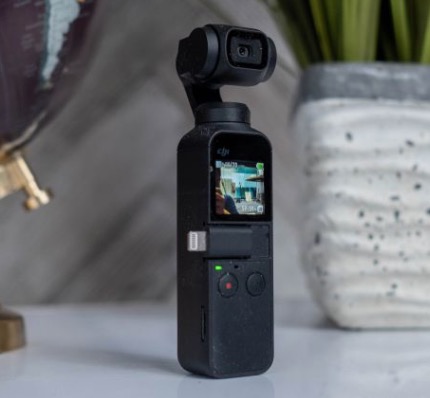
We recently got a hold of the Osmo Pocket 4K Video Camera by DJI and were quite impressed! The DJI Osmo Pocket puts video stabilization in the palm of your hand, with a small camera that smooths out your footage thanks to a 3-axis gimbal. It’s pocketable, like the name suggests, and doesn’t hog your smartphone, like the larger DJI Osmo Mobile 2. The fluid 4K resolution is ideal for anyone who uploads to YouTube, yet hates the idea of being shackled to professional-sized camera stabilization equipment. It’s not as durable as a GoPro and its microphone isn’t the best, but our testing proved that it’s the real ‘hero’ of smooth video and video transfer speeds.

Video below was produced by Kelsey Media Productions from footage we shot at the play date opening for Encore Boston Harbor located in Massachusetts. Video was shot with a DJI Osmo Pocket camera in 4K @ 60fps. Kelsey Media Productions

A camera that can be used for steady B-Roll footage along with having a small compact design makes it a great camera for on-the-go shooting or vacation fun!

5 Amazing 3D Printed House Projects!

A French family just became the first to permanently live in a 3D-printed home

At 350 square feet, the house was far cheaper than the average tiny home, which has a price tag hovering at around $25,000, but can often reach six figures. Before using 3D-printing technology, it took New Story eight months to build 100 homes, each costing about $6,000.

While the prototype was being developed, Icon’s printer, known as the Vulcan, was running at only 25% speed. That gave the companies confidence that they could build a 600- to 800-square-foot home in just 24 hours for $4,000 or less.

When it comes to producing an average-sized home — around 2,000 square feet — the savings aren’t quite as stark. A year after releasing its $10,000 prototype in Austin, Texas, Icon told the Wall Street Journal that printing a 2,000-square-foot home would cost around $20,000.

More remarkable is the fact that the company’s upgraded printer, the Vulcan II, is now available for purchase, and could soon be used to produce affordable homes in places like Austin and Latin America.

Icon’s first 3D model offers a glimpse of what the machine could produce in the future. Take a look.

The Vulcan II can produce a home seamlessly onsite, without having to piece together individual units. The Vulcan II can produce a home seamlessly onsite, without having to piece together individual units. The printer churns out layers of cement, which amass to form the walls of the home. Non-printed fixtures like doors and windows are installed later.

The Vulcan II is capable of producing walls that are up to eight-and-a-half feet tall and up to 28 feet wide.

The printer is designed to be mobile and weighs about 3,800 pounds. The Vulcan II is operated by a tablet, which means only a few workers are required to produce a 3D home.

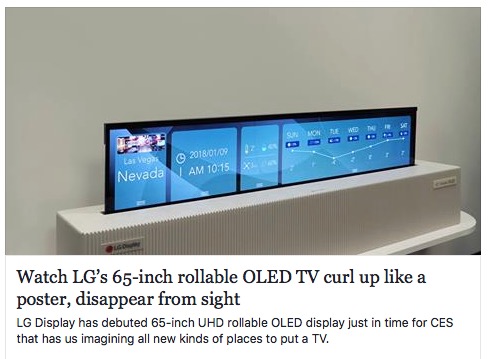
Watch LG’s 65-inch rollable OLED TV curl up like a poster, disappear from sight

We’ve seen the future of TV, and it rolls up like a newspaper. Now you can see it, too


WATCH VIDEO FOR ROLL UP TV

After two years of watching white-gloved LG Display engineers gingerly roll up prototype OLED panels, the company has finally created a functioning roll-up OLED TV. Of course the idea of being able to roll up your TV, throw it in your backpack and take it wherever you want is a fun, futuristic idea, but LG has found a more practical application for a rolling OLED television. It is both literally and figuratively the most flexible TV ever made.

This is how it works: flexible OLED panel is mounted to a motorized spindle, set in a rectangular box. You can’t see the mechanics, all you see is the TV going up and down. But why would you want to be able to move your TV up and down like this?

The appeal of hiding your TV is clear. When you don’t want to see your TV, you simply put it away. But the practical applications go further than that. You can adjust the TV so that it’s sized for different aspect ratios. Admittedly, different aspect ratios have a smaller size, but this is a very cool application for watching movies.

You may have noticed that, when watching movies, you see black bars on the top and the bottom of the screen. This is because many movies are filmed in a 2.39:1 (or 21:9) aspect ratio, and a convention 16:9 widescreen TV can’t fit the picture. To accommodate, the letterbox bars are added so you can see the full width of the film. By rolling this TV down to obscure part of the screen, the rolling OLED TV can be resized to 21:9, and the black bars are unneeded.

Roll it down a bit further, and you can have an extremely low-profile display which could be used for computing, informational display, or simply for showing pictures. Use your imagination. What would you place in a slick strip of roll-up OLED TV?

The TV won’t be seen commercially in 2018, but it could very well be LG’s flagship offering in 2019. This time next year, we could be talking about when you could buy your own roll-up OLED. Between now and then, LG TV needs to take this display and build it into a TV. It will need a box to handle HDMI connections, the processing chips, optical digital audio output jacks, and all the other features we’re used to seeing in a TV. It’s also possible LG’s TV division could somehow fold a soundbar into the final design.

It’s also possible the TV could be hidden in a piece of furniture, so you wouldn’t have a TV in the room until you pressed a button on a remote control.

The roll-up OLED isn’t the only innovation to be seen at the private LG Display booth. We also got up close and personal with the 88-inch 8K OLED and we’ll be posting video of that TV very shortly.


Falcons Debut ‘Halo Board’

Eye-popping 360-degree display highlights New Mercedes Benz Stadium

By Mark R. Smith from TV Technology

ATLANTA—After getting an eyeful of the massive main video boards that have been featured in new ballparks and stadia in recent years, sports fans had to wonder what the next step would be by the time Atlanta’s techno-cool Mercedes-Benz Stadium—which is billed as the most technologically advanced stadium in the world—opens this month.
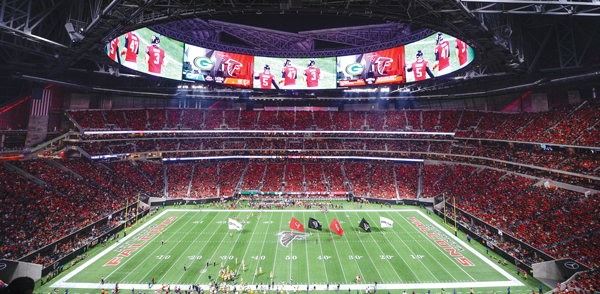
The new Halo Board in Mercedes Benz Stadium in Atlanta is a 360-degree, 62,000-square-foot circular
testament to technological fortitude.

The wonder was how much bigger a video display can get before it intrudes on the actual game that’s happening beneath it. But the crew and the contractors at AMB Group, the parent company of the NFL’s Atlanta Falcons, made that sentiment a moot point while going even bigger with a new idea.

For when the fans look toward the heavens when the Falcons need a dramatic score to win a game, they can send their prayers through Mercedes-Benz Stadium’s (here it comes…) “Halo Board.”

While video displays have been created in various shapes and sizes in recent years, this ensemble is a 360-degree, 62,000-square-foot circular testament to technological fortitude—under a roof that opens like a camera lens and is modeled after the Roman Pantheon. It will offer Falcon fans some interesting opportunities to share video and information, exercise the imagination and sell advertising.

NEW SENSATION
While the Halo Board in Mercedes-Benz Stadium isn’t the first circular-type screen—the outdoor board at Barclays Center in Brooklyn is similar, albeit much smaller and an irregular shape—it’s certainly something new.

“I haven’t seen anything of this magnitude,” said Tyler Jones, senior project manager with Daktronics, of the board that rests within the eight-section mega-circle of the roof that hangs under what’s known as the “Oculus.” He added that the company’s install outside of the Barclays Center gave it “something to draw on for the Atlanta project.”

That had to help the Brookings, S.D.- based company during the bidding process for the job, which commenced after the design of the stadium came back to the Falcons from HOK, a Kansas City, Mo.-based architectural firm.

“We were eventually awarded the job,” said Jones, “and there was a great deal of coordination with all of the people behind the team,” which included HOK Structural, then BuroHappold Engineering and IBM, the technical partner on the stadium that installed a passive optical network comprised of 3,770 miles of groundwork fiber cables.
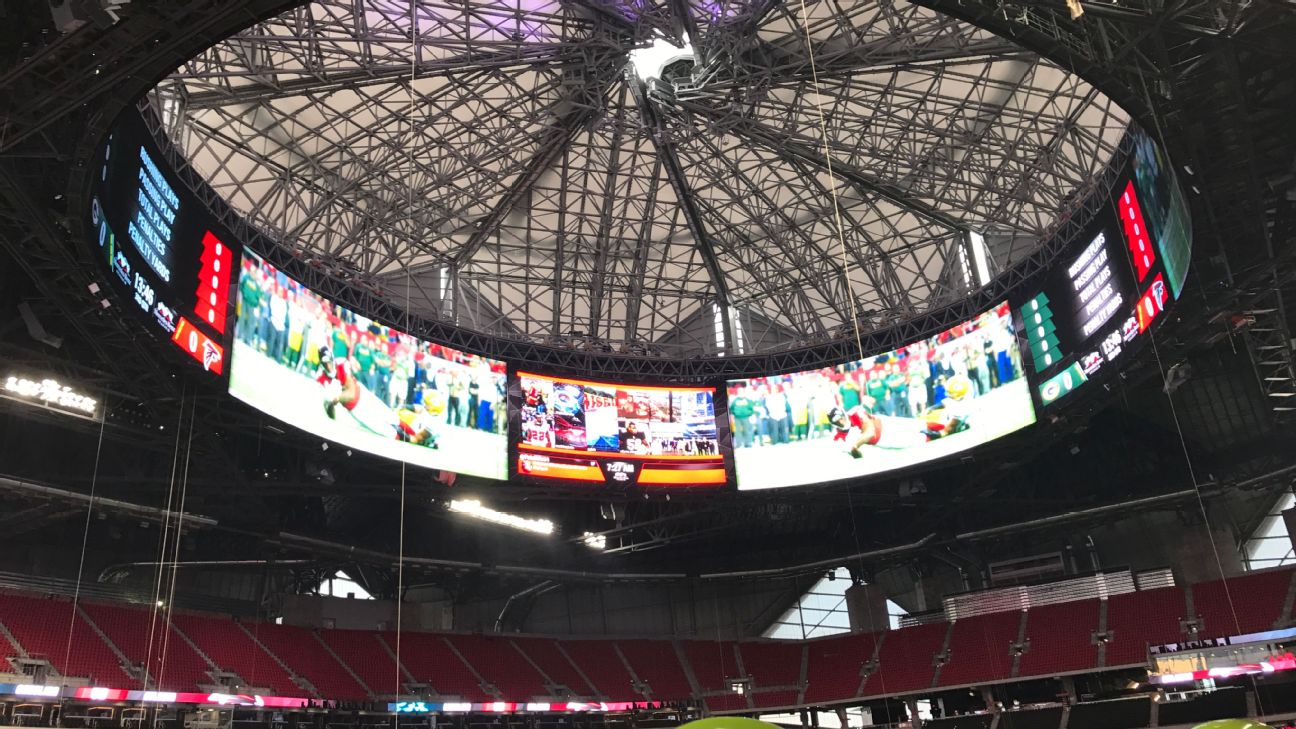
The “Mega Column” vertical measures 101 feet tall by 71 feet wide. Jones said Daktronics had “almost three dozen” workers on site; for the sake of comparison, that’s about two dozen more than the company needed five years ago to install the flat board in rightfield at Miami’s Marlins Park.

As far the construction of the Halo Board is concerned, its shape wasn’t quite the challenge one might think. “We can make the boards about any shape that is needed,” Jones said, “since 14.4 inches per square is our standard and we build around that. Within the Halo, the squares run 48 high and 896 wide,” totaling more than 43,000 squares.

Within the Halo, Daktronics also developed a 277V power option specific to the board, in lieu of the normal 120V power supply. “That allowed the Falcons to forgo using a number of smaller transformers,” said Jones, noting that it is embedded within the display.

The manufacturing process for the Halo Board began at Brookings headquarters in mid-October and ran until early February, and required the talents of more than 100 people to build; the install began in May, with that type of lead time necessary when Daktronics “had 616 pieces to mount in the stadium roof,” Jones said.

IN THE CORNER
Not lost in the buzz about the Halo Board is the “Mega Column,” which rests in the east corner of the stadium, by the massive end zone window that gives fans a panorama of the Atlanta skyline. The vertical display, which measures 101 feet tall by 71 feet wide, wraps around three of the four corners of that column.

“The information technology staff told me that the column has more square footage than the main boards in 17 other NFL stadiums,” Jones said, and it is fully visible to passersby outside the venue.

There is no end zone board on the east or west sides of Mercedes-Benz Stadium, which does include Daktronics ProRail ribbon boards on its north and south sides. They act as the railing for the upper deck and are topped with glass and handrails.

Mike Meglathery, senior project manager for broadcast systems integrator Diversified, described setting up the Halo Board as “technically challenging” for various reasons, not the least of which was obviously its size, which he termed “the equivalent of 12.5 video screens in a circle at 60 feet high, but it’s also a quarter-mile around.

“The biggest challenge was driving an image that can go all the way around it with pixel accuracy and synchronously,” he said. “We had to get all of the boards in sync.”

The Halo Board also required a “first of its kind graphics system” from Ross Video, the Tessera platform, which was developed for the Falcons and designed to offer enhanced IP video routing and connectivity.

The two million square-foot Mercedes Benz Stadium can hold up to 71,000 football fans. Modeled after the Roman Pantheon, it features a roof that opens like a camera lens.

Gus Drosos, technical principal at HOK, Kansas City, also noted the unusual approach that all involved had to take at Mercedes-Benz Stadium. “We had a tall structure” to address, meaning the 14.5-acre roof “was 198 feet above the ground. It became apparent that if we used that real estate to integrate a smooth ellipse, we could create a ‘theatre-in-the-round’ to give the fans a full immersive experience.”

Drosos said that, initially, what became the Halo Board “was segmented, but as we worked with the Falcons, it became apparent that making it round would work.” Thus was the establishmsent of a 70-foot tall board, “with a 10-foot gap on top until you hit the flat roof would work.

“We saw the Halo Board as an opportunity to take the scoreboard out of the line of sight,” he said, and the Falcons “were excited about the possibilities of the board, because the team’s video operators can drive a car or bounce a ball around it. No one has done this, so there is an evolution of ideas going on. The potential for what they can do with this board is unprecedented.”

THE POSSIBILITIES
Drosos also mentioned a social media angle for the display. With a new stadium that features 1,800 wireless access points that allow 75,000 fans to stream concurrently, “wouldn’t it be cool if the team [and the NFL, which would have to set up a protocol] let the fans use social media and integrate them into the Halo Board, or offer them specials?” he mused. “What does this present for other activities? Can you play video games on it? Could you potentially put something on 3D on it and give fans special glasses, if the technology can allow that?”

Jones noted that “the most important thing I learned from this project was that the communication between the architects and designers, as well as the contractors and those who worked in manufacturing, was especially important. That’s what made this happen.

“It’s pushed us forward,” he added, “because there will be more interest in this type of video application. Stadiums are trying to push the envelope and we’re anticipating more interest in this type of design as we move forward.”

Meglathery agreed. “It’s stunning what it does and it will elevate the in-stadium fan experience. This the showpiece video board for America at this point.”
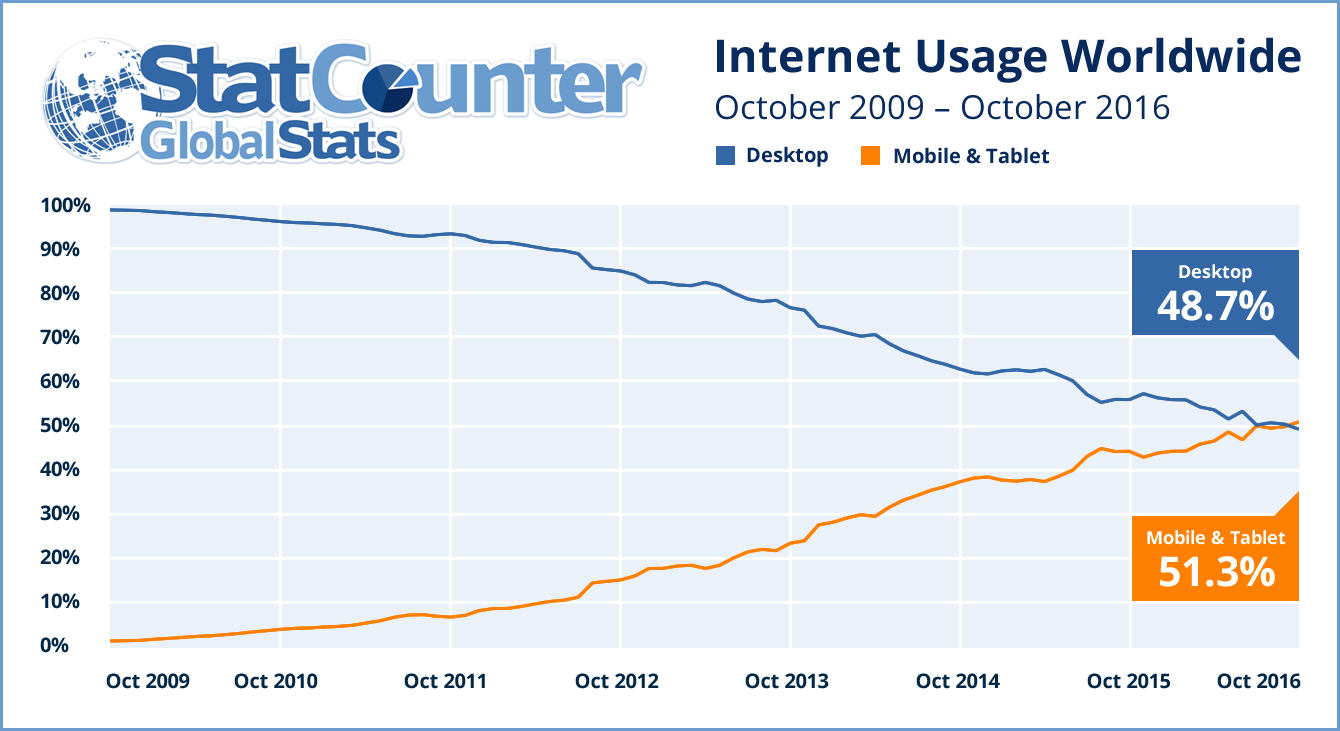
Mobile internet use passes desktop for the first time!

More users around the world are accessing the internet from mobile devices than from desktop computers for the first time, according to internet monitoring firm StatCounter. The combined traffic from mobile and tablet devices tipped the balance at 51.2 percent, vs. 48.7 percent for desktop access, marking the first time this has happened since StatCounter began tracking stats for internet usage.

It’s a huge moment for the web overall: this means going forward, companies that haven’t yet decided to focus on a mobile-first approach to their internet services and web properties really should, as the trend line is unlikely to reverse.

StatCounter also found that the maturity of the market impacts which is the dominant means of access, and as you might have guessed, mobile platforms are far and away the method of choice for internet access when it comes to emerging markets like India, where they account for 75 percent of use. More mature markets including the UK, the US and Ireland still see use swinging in favor of desktop, but the trend is still showing a narrowing gap.

internet_usage_2009_2016_ww

This is not surprising news, given other recent milestones. In April last year, for instance, comScore found that the number of internet users who employ mobile platforms exclusively has surpassed those who only connect via desktop in the US (this doesn’t consider users who access via both methods). And Google revealed that more searches through its engine are being conducted via mobile platforms than on desktop as of last May.

This may have been a long time coming, but it’s still astounding how many major brands (including possibly our own) favor the desktop first and prioritize mobile web second. Maybe now that this tipping point has been achieved, that will start to change a lot faster.

5 Awesome Things You Can Do With Google Cardboard

Google Cardboard turns your smartphone into a full-on virtual reality device without the high price tag. It’s made out of exactly what you’d expect, but its pieces come together to hold your smartphone in front of your face for use with VR apps.

RELATED: The 17 Coolest Things We Saw at CES

With your phone acting as the display and your homemade headset holding it in the right place, Google Cardboard presents itself as a lower-impact Oculus Rift. There are a variety of Cardboard-style headsets available for purchase from the official Google Cardboard website. Some are fancier than others, but you can expect to pay $20–$30 for your own. (May we recommend the Star Wars-themed Cardboard?) After punching out the pieces and putting it all together, there are a number of apps to use that respond to head motions, immersing the wearer in a virtual reality landscape. These apps feature a designated “Works With Google Cardboard” logo so you know that they are specialized.

The Cardboard-compatible apps are cataloged on this page of the Google Play store, and they run the gamut. Titans of Space is a virtual reality tour of our solar system and outer space. A game called WAA! immerses you in a field of asteroids. Sisters presents itself as a terrifying ghost story game, and for the more utility-minded, an app called Tilt Brush Gallery lets you view sketches in 3D. This only scratches the surface, but they all serve the same purpose: to transport the app’s user to some place that is otherwise completely impossible to get to. With that in mind, here are five cool things you can do with Google Cardboard.

RELATED: Virtual Reality Check

Take 360-degree photos and send them to friends.

The camera in your smartphone is all you need to generate an immersive virtual reality-style photograph that someone can pan and scan through from their own Cardboard setup. Google’s proprietary photo app will stitch together the many photos required to make an entirely 360-degree experience, and it will even record live audio from the scene you’re capturing.

Read the paper in an entirely new way.

The NYT VR app provides users with news stories in virtual reality format “every month or so.” Content is one of the most obvious things to be reinvented by virtual reality technology, and the New York Times is one of the first media companies to get serious about being ready to have serious offerings when VR proliferates.

Disappear inside virtual game worlds.

Whether you’re investigating the spooky scenes of Insidious Chapter 3 or falling out of the sky in Caaaaardboard!, Cardboard can embed you in a daydream escape fantasy taking place on your smartphone screen. Just don’t let your boss catch you using it at work.

Explore the real world.

Browsing Google Street View through virtual reality goggles is sure to be nostalgic or adventurous depending on where you decide to “go.” Tour your old hometown, or brave the freezing temps of Antarctica from the comfort of your current home. An app called Orbulus zooms in on destinations of note, allowing you to explore everything from the Sydney Opera House to Paris at night.

Watch regular media in a new way.

An app called VR Cinema renders your stored video into split-screen format compatible for VR hardware, like Cardboard.